Fabric Knowledge
12 Fabrics Every Sewing Student Should Know Before Starting
12 July 2026 · 8 min read · By ONSA
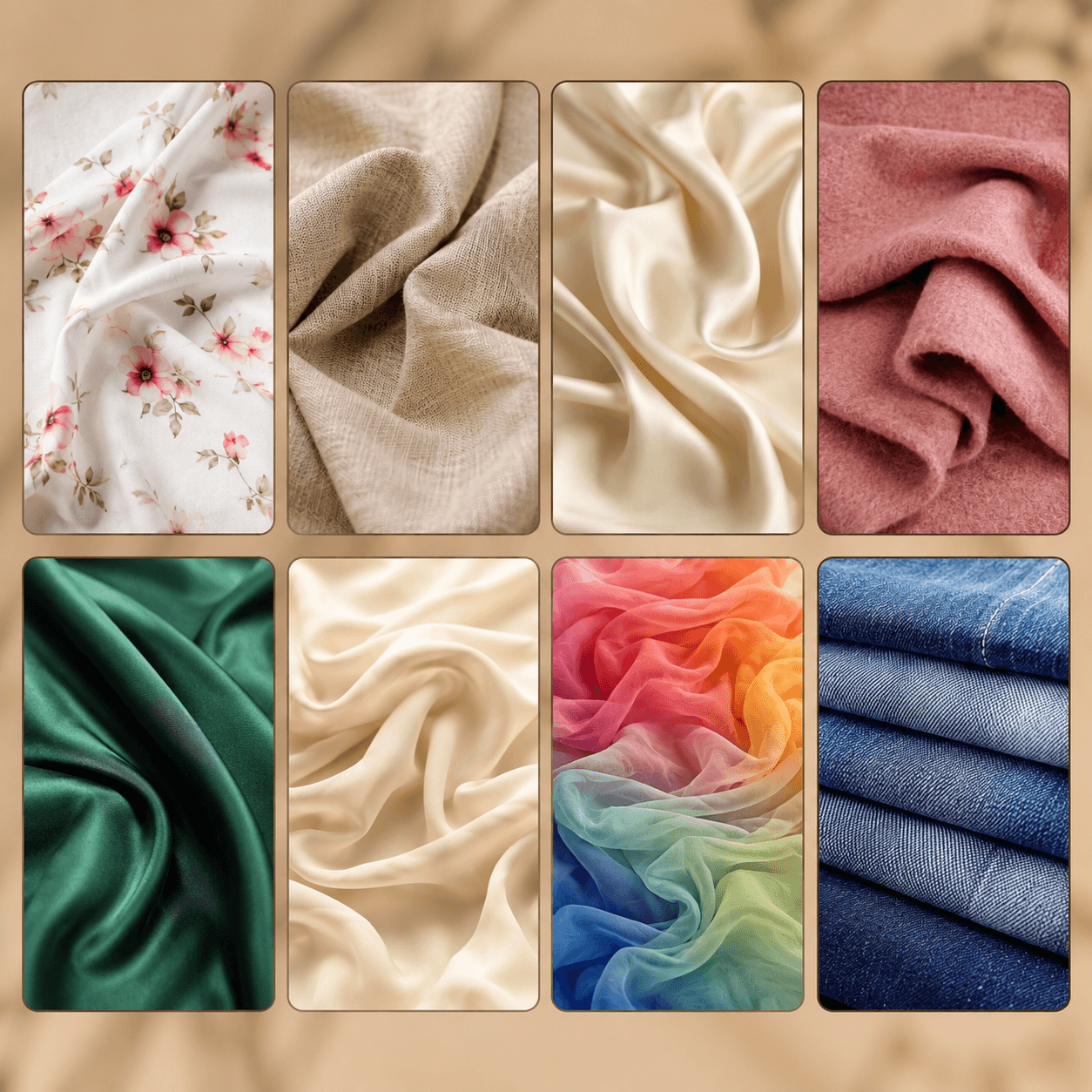
Before you make your first stitch, you need to speak fabric's language.
At ONSA, every student — whether learning tailoring basics or professional fashion design — starts by understanding fabric types. Not just looking at them, but understanding how each fabric behaves when you cut, stitch, and wear it.
This fabric guide covers the 12 fabric types you'll encounter most often in online sewing classes and real garment-making. Learn them, and you'll know exactly which fabric to reach for — and what to expect when you sew.
Cotton
NaturalSoft, fluffy fibers from the cotton plant. Highly breathable, absorbent, durable, and comfortable. Takes dye beautifully. Prone to wrinkling. Can shrink if not pre-washed.
Best For
T-shirts, everyday casual wear, bedding, denim, underwear, towels.
Pro Tip
Pre-wash cotton before cutting. A 1–2% shrinkage is normal and means the fabric will hold better after stitching.
Linen
NaturalMade from flax plant fiber. One of the oldest fabrics — known for strength, durability, and natural luster. Highly breathable and lightweight. Wrinkles easily, which is part of its relaxed aesthetic.
Best For
Summer dresses, lightweight suits, button-up shirts, relaxed pants, tablecloths, curtains.
Pro Tip
Linen wrinkles are a feature, not a flaw. Embrace the relaxed look. Press gently before wearing.
Silk
NaturalNatural protein fiber produced by silkworms. Renowned for its smooth, lustrous surface, soft feel, and beautiful drape. Lightweight and strong — warm in winter, cool in summer. Requires delicate care.
Best For
Formal wear, evening gowns, blouses, lingerie, scarves, luxury bedding.
Pro Tip
Handle with respect. Use French seams. Press on low heat with a pressing cloth.
Wool
NaturalProtein fiber from sheep fleece (or goats = cashmere, alpacas = alpaca wool). Excellent insulation, elasticity, and warmth — even when damp. Naturally wrinkle-resistant. Can be itchy depending on fiber fineness.
Best For
Sweaters, suits, coats, trousers, blankets, socks, thermal wear.
Pro Tip
Fine merino or lambswool = comfort. Cheap wool = itch. Always feel the fabric before buying.
Hemp
NaturalFiber from the Cannabis sativa plant. Highly sustainable, extremely durable, and resistant to mold and UV light. Softens beautifully with each wash. Texture similar to linen.
Best For
Casual clothing, bags, ropes, canvas, industrial textiles.
Pro Tip
Eco-conscious choice. Quality only improves with age and wear.
Polyester
SyntheticSynthetic fiber known for exceptional strength, durability, and wrinkle resistance. Quick-drying and holds colour well. Not very breathable. Can hold static electricity. Blends beautifully with natural fibers.
Best For
Sportswear, outerwear, jackets, dresses, shirts, upholstery, blended fabrics.
Pro Tip
Blended with cotton (50/50) gives you durability + breathability. Best of both worlds.
Nylon
SyntheticSynthetic thermoplastic polymer — incredibly strong, elastic, and lightweight. Water-resistant and quick-drying. Can melt under high heat. Not very breathable.
Best For
Hosiery, swimwear, rainwear, windbreakers, athletic wear, luggage.
Pro Tip
Handle heat carefully — low iron only. Great for activewear due to stretch and durability.
Spandex (Lycra/Elastane)
SyntheticSynthetic fiber with extraordinary elasticity — can stretch up to 500% and recover. Always blended with other fibers. Adds stretch, comfort, and shape retention.
Best For
Leggings, swimwear, athletic wear, dancewear, figure-hugging garments.
Pro Tip
Even 2–5% spandex in cotton makes a huge difference in comfort. Feel the stretch before buying.
Acrylic
SyntheticSynthetic fiber engineered to mimic wool. Soft, lightweight, and warm — with excellent colorfastness. Can pill easily if low quality. Not very breathable.
Best For
Sweaters, blankets, knitwear, upholstery, craft yarns.
Pro Tip
Budget-friendly wool alternative. Quality varies widely — always feel before buying.
Rayon (Viscose)
Semi-SyntheticMade from regenerated cellulose (wood pulp). Affordable alternative to silk — soft feel, good drape, breathable. Can wrinkle easily and may not be durable when wet.
Best For
Blouses, dresses, linings, summer clothing, scarves.
Pro Tip
Handle wet rayon gently. Dry clean when possible. The drape is beautiful for flowing designs.
Modal
Semi-SyntheticType of rayon made from spun beechwood cellulose. Softer than regular rayon, highly breathable, absorbent, and resistant to shrinkage and fading. Drapes beautifully.
Best For
Underwear, pajamas, sportswear, towels, bed linens, loungewear.
Pro Tip
Soft luxury at an affordable price. Perfect for everyday comfort clothing.
Georgette
Woven StructureLightweight, semi-sheer, crinkled fabric that drapes fluidly. Originally made from silk, now often polyester. Perfect for traditional and fusion Indian wear.
Best For
Sarees, suits, kurtis, lehengas, dupattas, scarves, party wear.
Pro Tip
Drapes fluidly and elegantly. Requires delicate handling — worth the extra care.
Quick Reference
| Fabric | Breathable? | Easy Care? | Best For |
|---|---|---|---|
| Cotton | ✓ Yes | ✓ Yes | Everyday wear |
| Linen | ✓ Yes | ✓ Yes | Summer wear |
| Silk | ✓ Yes | ⚠ Delicate | Formal wear |
| Wool | ✓ Yes | ⚠ Careful | Winter wear |
| Polyester | ✗ No | ✓ Yes | Sportswear |
| Rayon | ✓ Yes | ⚠ Careful | Blouses |
| Georgette | ✓ Yes | ⚠ Careful | Traditional wear |
Every fabric has its own story, texture, and personality. The more you experiment, the more confident you'll become in your creations.
"When you know your fabric, your hands start speaking the language of fashion."
Ready to Learn Fabric Handling?
Our online sewing courses teach you how to select, cut, and sew every fabric type — from cotton basics to silk and georgette.
ONSA — Online Sewing Academy has trained 3,000+ students across India and 12+ countries through structured online sewing classes and fashion designing courses.