Fabric Knowledge
7 Fabric Mistakes Beginners Make (And How to Fix Them)
12 July 2026 · 6 min read · By ONSA
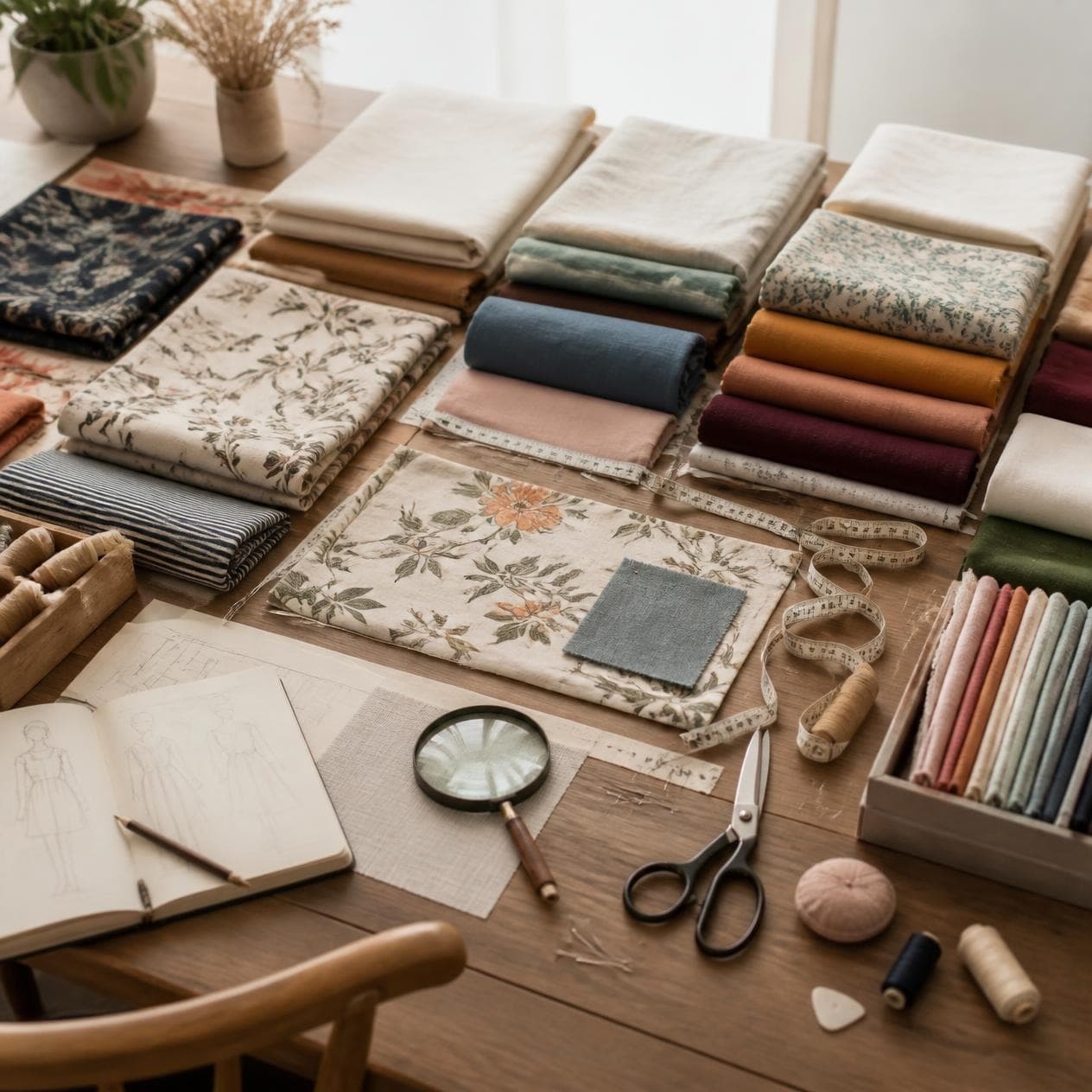
When I started teaching sewing, I noticed one thing: most sewing failures happen before the needle touches fabric.
At ONSA, we've trained over 3,000 students across India and globally through our online sewing classes. The students who master fabric selection always create better garments than those who rush to the sewing machine. Here are the 7 fabric mistakes I see most often.
1. Ignoring Directional Prints (The "Junior Tailor" Mistake)
This is the dead giveaway of amateur sewing.
The problem: You buy a fabric with Buddha faces, flowers, or any design with a clear "up" direction. You cut both pant legs without flipping the pattern. Now one leg has the design facing up, the other facing down. Your garment looks unfinished — even if your stitching is perfect.
The fix:
- Check the print direction before you buy
- All-over prints (flowers in all directions) are safest for beginners
- For directional prints, check how the pattern falls when the fabric is folded
- Flip and arrange pattern pieces so everything faces the same way
One of our students spent 4 hours stitching a kurta only to realise the floral print was upside down on the sleeves. She had to unpick everything. Now she always does the "fold test" at the fabric shop.
2. Cutting on the Wrong Grain (The Elasticity Trap)
Your clothes need to stretch horizontally across your body — not vertically.
The problem: Manufacturers sometimes turn fabric sideways to save material — 2 meters instead of 2.25. This switches the stretch direction. Your dress now shrinks upward instead of inward, the hem hangs lower than the lining, and nothing fits right.
The fix:
- Always check the selvage — the tightly woven edge of fabric
- The selvage should run down the sides of your body, never across the top and bottom
- Lengthwise threads (warp) = no elasticity, runs up-down
- Crosswise threads (weft) = natural stretch, runs side-to-side
3. Buying Short on Fabric
"The shopkeeper said 2 meters was enough."
The problem: You get home, cut your pattern, and suddenly you're 10cm short. The neckline sits wrong. The hem is uneven. And you can't return it.
The fix:
- Carry your own inch tape to the fabric shop — always
- Standard Indian market fabric: 44 inches wide (sometimes 40–42)
- If your pattern needs 2.25 meters, buy 2.25 meters. No shortcuts.
- A small leftover is better than starting over
Bonus tip: If you see 43 inches instead of 44, that's a good sign — it means the fabric is pre-washed and will hold better after stitching.
4. Not Unfolding Fabric to Check for Defects
You see a nicely folded bundle. It looks perfect. You pay and leave.
The problem: When you unfold it at home, there's a grease stain, a weaving mistake, or a colour mismatch in the middle. You can't return it now.
The fix:
- Unfold the entire bundle right there in the shop
- Check for faults, colour consistency, and print alignment
- This 5-minute check saves you hours of frustration later
5. Ignoring Fabric Width Standards
Your pattern was drafted for 44-inch fabric. You buy 56-inch surplus. Now everything is too wide.
The fix:
- Standard Indian market: 44 inches (sometimes 40 or 42)
- Surplus/Export fabrics: 56, 58, or 60 inches — higher quality, cheaper due to minor defects
- If buying surplus export fabric, re-calculate your pattern layout accordingly
6. Throwing Away Fabric Scraps
"It's too small to use anyway." This habit wastes money and creative potential.
The fix — save every scrap larger than 15cm:
- Contrasting pipings on future garments
- Patch pockets or matching patches
- Quilt projects
- Test pieces for new stitching techniques
- Travel pillows — genuinely useful!
7. Not Understanding Fabric Behavior Before Cutting
You bought the fabric. You're excited. You cut immediately.
The problem: Only after cutting do you realise the fabric frays heavily, doesn't drape the way you expected, or has stretch you didn't account for.
The fix:
- Test a small piece before cutting your final garment
- Check: How does it fray? Does it stretch? How does it drape?
- Wash a test swatch if it will be worn frequently
- Understand the fiber content — cotton, silk, polyester, blends all behave differently
Your Fabric Shopping Checklist
- ✓Check print direction before buying
- ✓Measure fabric width yourself
- ✓Unfold and inspect for defects
- ✓Understand the grainline
- ✓Buy enough — never short
- ✓Save your scraps
- ✓Test fabric behavior before cutting
Actual sewing is only one-fifth of the work. The rest is all knowledge.
Master fabric selection, and your garments will fit better, wear longer, look professional, and feel comfortable. You'll stop fighting with fabric and start creating with it.
Want Hands-On Guidance?
Our online sewing courses teach you exactly how to work with different fabrics so you never waste money or time again.
ONSA — Online Sewing Academy has trained 3,000+ students across India and 12+ countries through structured online sewing classes and fashion designing courses.