Sewing Essentials
Essential Sewing Tools Every Beginner Must Know
12 July 2026 · 5 min read · By ONSA
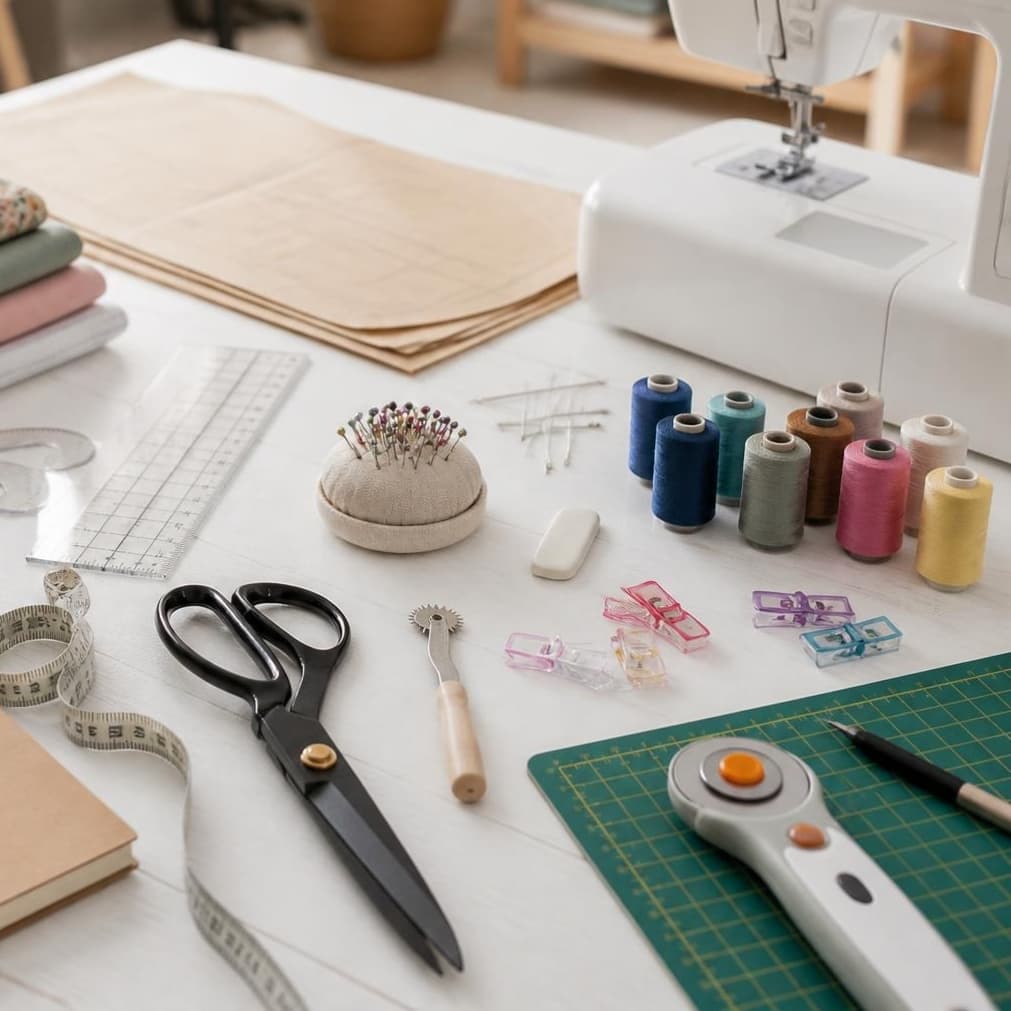
Every beginner in stitching needs a few essential tools to start confidently and work neatly. These basic sewing tools make your work faster, more accurate, and more enjoyable.
You don't need to invest in expensive equipment right away. Start with these 15 must-have sewing tools, and you'll be amazed at how much more control you have over your projects.
1. One Foot Scale (12-inch Ruler)
Description: A 12-inch (30 cm) rigid ruler, usually plastic or metal.
Use: Helps in marking straight lines, squaring corners, and checking small measurements in drafting.
Importance: Ensures accuracy in paper pattern drafting and small garment parts like pockets, collars, and plackets.
2. Sewing Journal
Description: A personal logbook or notebook.
Use: To record body measurements, design sketches, sewing instructions, alterations, and learning notes.
Importance: Acts as a designer's memory bank; helps track improvement, projects, and fabric details.
3. Measuring Tape
Description: Flexible strip of plastic or fiberglass, usually 60 inches long, marked with inches and centimeters.
Use: For taking body measurements and marking on fabric. Its flexibility helps measure curves like bust, waist, and hip.
Importance: The most basic and mandatory tool in tailoring. Without accurate measuring tapes, your garments won't fit.
4. Fabric Marker / Tailor's Chalk
Description: Chalk sticks, pencils, or pens designed for fabric marking.
Use: For drawing darts, pleats, cutting lines, and sewing guides on fabric.
Importance: Marks are temporary and disappear after ironing or washing — no permanent stains on your fabric.
5. Bobbins & Case
Description: Small metal or plastic spools placed inside the sewing machine.
Use: Holds the lower thread for machine stitching. The case ensures proper tension.
Importance: Essential for balanced and neat stitches. Poor bobbin tension creates uneven seams.
6. Fabric Scissors
Description: A wheel with spikes attached to a handle — transfers pattern markings onto fabric.
Use: Transfers pattern markings onto fabric with carbon paper.
Importance: Essential for accurate darts, pleats, and seam guides.
7. Sewing Machine Needles
Description: Needles with a flat side shank and hole (eye) near the pointed tip.
Use: Provides neat, strong, and fast stitching compared to hand-sewing.
Types:
- •Universal (general fabrics)
- •Ballpoint (knits)
- •Denim (thick fabrics)
- •Embroidery (decorative threads)
Importance: The correct needle prevents fabric damage and skipped stitches.
8. Hand-Sewing Needles
Description: Slim, sharp needles with an eye at the top. Sizes range from 1 (largest) to 12 (smallest).
Use: For hand-stitching, embroidery, hemming, or finishing details.
Importance: Essential for beginners as mistakes are easily corrected by hand.
9. Sewing Machine
Description: A mechanical or electronic machine for stitching fabric.
Use: Provides neat, strong, and fast stitching compared to hand-sewing.
Importance: The heart of garment construction. Every sewing enthusiast needs one.
10. Thread Cutter
Description: A small scissor-like tool with a sharp blade.
Use: Quickly trims thread ends while stitching.
Importance: Saves time and ensures neat finishing.
11. Sewing Threads
Description: Long, thin strands of cotton, polyester, or silk wound on a spool.
Use: Joins fabrics by stitching. Matching thread color ensures invisible seams.
Types: Cotton (soft, light fabrics), Polyester (all-purpose, strong), Silk (delicate and luxury fabrics)
Importance: Matching thread color ensures invisible seams; strong thread gives garment durability.
12. Thread or Sewing Tool Box
Description: A box to organize threads, bobbins, needles, and small sewing tools.
Importance: Keeps your workspace neat and prevents mislacing essential items.
13. Pin Cushion
Description: A small stuffed cushion, sometimes magnetic, used to keep pins.
Use: Safely stores pins and needles, keeping them within reach.
Importance: Prevents accidents, saves time, and organizes pins.
14. Fusing Canvas
Description: Interfacing with adhesive glue on one side.
Use: Gives structure to collars, cuffs, waistbands, and facings.
Importance: Prevents fabric from sagging or stretching out.
15. Seam Ripper
Description: Small handle with a forked metal head — one side sharp, one side with a red ball.
Use: Removes unwanted stitches, opens buttonholes, and separates seams without damaging fabric.
Importance: Essential for beginners as mistakes are common. A time-saving correction tool.
Accurate body measurement is the foundation of professional tailoring. Start with these 15 essential tools, practice regularly, and your sewing will transform into a professional craft.
"The right tools don't make you a great tailor, but they sure make the journey easier."
Ready to Start Your Sewing Journey?
Learn how to use each of these tools effectively in our structured online sewing courses.
ONSA — Online Sewing Academy has trained 3,000+ students across India and 12+ countries through structured online courses in tailoring and fashion design.